
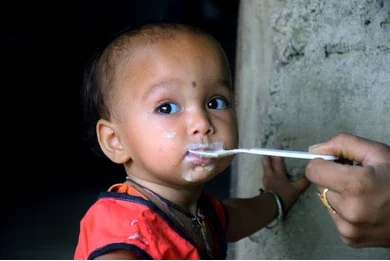
Weaning is a critical phase in a child’s development, marking the transition from exclusive breastfeeding to a full family diet. This period typically spans from six months to around two years. The process of weaning is not just about the diet shift; it’s an active journey for the child, guided by instinct and self-reliance.
The Active Role of the Child in Weaning
Both exclusive breastfeeding and transitioning to a full family diet are active processes driven primarily by the child. While the mother provides support, the child is the one who actively engages—be it through breastfeeding or learning to self-feed. In breastfeeding, for instance, the mother offers milk, but it is the child who actively takes it.
Understanding this activeness is crucial for healthcare providers when supporting mothers in establishing breastfeeding. Without recognizing the child’s inherent role, efforts to help the mother can fall short.
Breast Crawl and the Instinct of Self-Feeding
Many of us are familiar with the “Breast Crawl” video by UNICEF and BPNI Maharashtra. This eye-opener demonstrates how newborns instinctively root and suckle immediately after birth. This natural behavior highlights that milk is expressed through the baby’s inherent ability to latch onto the breast.
Similarly, the transition to a full family diet emphasizes self-feeding. However, in India, traditional practices often overlook this aspect. Feeding a child with semisolids or solids by the mother or caretaker does not constitute weaning; it is considered a faulty feeding technique. True weaning is achieved when the child starts self-feeding, a milestone that has significant psychological and developmental implications. A self-feeding child becomes independent, confident, and enjoys food without it being a point of contention between the mother and child.
Feeding as a Habit, Not a Question of Appetite
A child’s eating habits are often more about routine than appetite. Mothers often express concerns like, “He just does not eat anything.” What they usually mean is, “He does not eat what, when, or how much I want him to.” Statements like, “He gives a lot of trouble over eating,” actually reflect the mother’s struggles, not the child’s. Forced feeding brings numerous drawbacks, and often, the real issue is “over-mothering.” Mothers must be made aware of how overindulgence can harm their child’s nutrition, growth, and development.
The Full Family Diet: Balancing Tradition and Nutrition
In the Indian context, a full family diet implies a balanced diet. However, it is mistakenly assumed that all families cook and consume balanced meals. The reality is far from this assumption. Often, the staple diet is not nutritionally balanced, and imbalanced diets contribute more to malnutrition than inadequate diets. The issue isn’t just poverty; it’s a lack of awareness. Surprisingly, even well-to-do, educated families have stunted children simply because they don’t understand proper nutrition. Indian kitchens are governed by tradition rather than nutritional science, often overlooking the importance of a balanced diet.
Fruits and vegetables, for instance, are viewed by many as luxuries rather than essentials. Scientific recommendations like “five servings of fruits daily” are rarely followed, as the general mindset doesn’t prioritize nutrition.
Many families pride themselves on the high consumption of cow’s milk by their children. While milk from an Indian breed cow may hold cultural value, it is not necessarily a nutritious choice for children. We often see stunted, anemic, and constipated children due to excessive consumption of animal milk, which should not be a staple of weaning diets. Weaning foods should be semisolid—not liquid, not solid. Common foods like rice water, dal water, vegetable soup, chicken soup, and fruit juice, though popular, are not suitable for weaning as they are liquid diets.
The Weaning Process: A Blend of Self-Feeding, Semisolid Foods, and Balanced Nutrition
The successful conclusion of weaning should ideally happen around the child’s second birthday, depending on the child’s developmental maturity rather than their chronological age. The key components of weaning are:
- Transition from Semisolid to Solid Foods: Gradually introducing more solid textures helps the child adapt to family meals.
- Encouraging Self-Feeding: Allowing the child to feed themselves fosters independence and confidence.
- Maintaining a Balanced Diet: A nutritious, balanced diet is crucial for the child’s overall development and well-being.
Conclusion
Our dietary advice to mothers must be rooted in the socio-economic context while integrating scientific nutritional knowledge. By emphasizing the importance of self-feeding, balanced diets, and the active role of the child, we can support healthy and successful weaning in the Indian setting.

गुरुवर्य,
Excellent. Awesome.!
Appreciation.
Thanks dr. Dabhadkar, virtual space also needs our attention. After contributing on grassroot ground level, worth exploring spce.
Very well written article 👌🏻👍🏻👍🏻
Very informative 👍🏻👍🏻
Super informative
Very useful information sir,superb👌👌
Excellent blog sir !
This is going to help many mothers as i was one of them.
You actually made the transition very easy and comfortable for my child and me
Thank you
Excellent 👌 very informative..
Very good sir, very informative to all. Thanks..
VERY INFORMATIVE. THANKU SIR.
Very useful information.
Thanks.
Nice in-depth information…. need to b implicated all over….
Very well written article.
Complimentary feeding is not easy task . Feeding problems in children may be correlated to faulty weaning practices.
खूप खास आणि सविस्तर माहिती
Your passion for teaching has ignited a love for learning within me that will last a lifetime. Thank you for being such an incredible teacher and mentor!
Thanks sneha. अभ्यास कौशल्ये पद्धतशीरपणे शिकवता येतात. ज्यांची खरोखरच शिकायची इच्छा असेल, त्यांना शिकता येतात.