Dr. Anil Mokashi

Weaning in India: Encouraging Self-Feeding and Balanced Nutrition

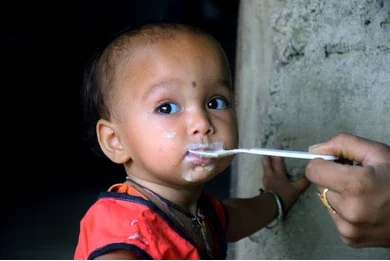
Weaning is a critical phase in a child’s development, marking the transition from exclusive breastfeeding to a full family diet. This period typically spans from six months to around two years. The process of weaning is not just about the diet shift; it’s an active journey for the child, guided by instinct and self-reliance. The Active Role of the Child in Weaning Both exclusive breastfeeding and transitioning to a full family diet are active processes driven primarily by the child. While the mother provides support, the child is the one who actively engages—be it through breastfeeding or learning to self-feed. In breastfeeding, for instance, the mother offers milk, but it is the child who actively takes it. Understanding this activeness is crucial for healthcare providers when supporting mothers in establishing breastfeeding. Without recognizing the child’s inherent role, efforts to help the mother can fall short. Breast Crawl and the Instinct of Self-Feeding Many of us are familiar with the “Breast Crawl” video by UNICEF and BPNI Maharashtra. This eye-opener demonstrates how newborns instinctively root and suckle immediately after birth. This natural behavior highlights that milk is expressed through the baby’s inherent ability to latch onto the breast. Similarly, the transition to a full family diet emphasizes self-feeding. However, in India, traditional practices often overlook this aspect. Feeding a child with semisolids or solids by the mother or caretaker does not constitute weaning; it is considered a faulty feeding technique. True weaning is achieved when the child starts self-feeding, a milestone that has significant psychological and developmental implications. A self-feeding child becomes independent, confident, and enjoys food without it being a point of contention between the mother and child. Feeding as a Habit, Not a Question of Appetite A child’s eating habits are often more about routine than appetite. Mothers often express concerns like, “He just does not eat anything.” What they usually mean is, “He does not eat what, when, or how much I want him to.” Statements like, “He gives a lot of trouble over eating,” actually reflect the mother’s struggles, not the child’s. Forced feeding brings numerous drawbacks, and often, the real issue is “over-mothering.” Mothers must be made aware of how overindulgence can harm their child’s nutrition, growth, and development. The Full Family Diet: Balancing Tradition and Nutrition In the Indian context, a full family diet implies a balanced diet. However, it is mistakenly assumed that all families cook and consume balanced meals. The reality is far from this assumption. Often, the staple diet is not nutritionally balanced, and imbalanced diets contribute more to malnutrition than inadequate diets. The issue isn’t just poverty; it’s a lack of awareness. Surprisingly, even well-to-do, educated families have stunted children simply because they don’t understand proper nutrition. Indian kitchens are governed by tradition rather than nutritional science, often overlooking the importance of a balanced diet. Fruits and vegetables, for instance, are viewed by many as luxuries rather than essentials. Scientific recommendations like “five servings of fruits daily” are rarely followed, as the general mindset doesn’t prioritize nutrition. Many families pride themselves on the high consumption of cow’s milk by their children. While milk from an Indian breed cow may hold cultural value, it is not necessarily a nutritious choice for children. We often see stunted, anemic, and constipated children due to excessive consumption of animal milk, which should not be a staple of weaning diets. Weaning foods should be semisolid—not liquid, not solid. Common foods like rice water, dal water, vegetable soup, chicken soup, and fruit juice, though popular, are not suitable for weaning as they are liquid diets. The Weaning Process: A Blend of Self-Feeding, Semisolid Foods, and Balanced Nutrition The successful conclusion of weaning should ideally happen around the child’s second birthday, depending on the child’s developmental maturity rather than their chronological age. The key components of weaning are: Conclusion Our dietary advice to mothers must be rooted in the socio-economic context while integrating scientific nutritional knowledge. By emphasizing the importance of self-feeding, balanced diets, and the active role of the child, we can support healthy and successful weaning in the Indian setting.

Weaning in India: Encouraging Self-Feeding and Balanced Nutrition Read Post »

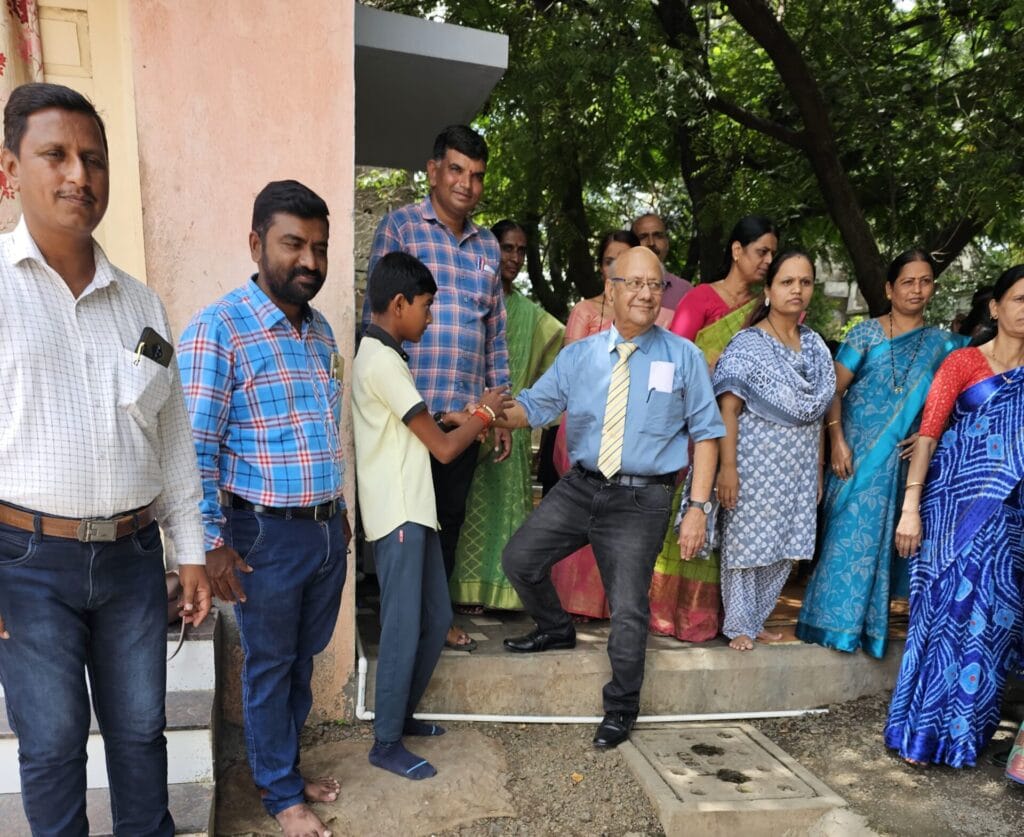
Me and Our BKK staff

My Journey as a Pediatrician – Part 2: Expanding Horizons

In the second part of my journey, I want to delve deeper into the experiences that have shaped my approach to pediatrics and social work. The road has been long, with many lessons learned along the way, but each step has brought me closer to fulfilling my mission of making a lasting impact on the lives of children and their families. Integrating Social Work into Pediatric Care As my work in pediatrics deepened, I began to see more clearly the intersection between health and social factors. Many of the issues faced by the children I treated were not just medical but also deeply rooted in social and economic conditions. This realization pushed me to expand my focus beyond the clinic, to engage in social work that could address these broader determinants of health. One of the key initiatives I was involved in was a community outreach program that aimed to improve child health in underserved areas. We conducted health camps, provided nutritional support, and offered educational workshops for parents. The goal was to empower communities with the tools and knowledge to improve their children’s health, even in the face of economic challenges. This work reinforced my belief that pediatric care must be holistic, addressing not just the child’s medical needs but also the social environment in which they live. Education: A Lifelong Passion Education has always been close to my heart. In addition to my work with Bal Kalyan Kendra, I have been involved in various educational initiatives aimed at improving the quality of education for all children. Whether through my writings, public speaking, or direct involvement in educational programs, my goal has been to advocate for a system that recognizes and nurtures the unique potential of every child. One of the initiatives I am particularly proud of is our vocational training program at Bal Kalyan Kendra. Recognizing that not all children fit into the traditional academic mold, we developed a curriculum that offers practical skills training. This program has opened up new opportunities for our students, giving them the confidence and abilities to lead independent, fulfilling lives. Looking to the Future: Continuing the Mission As I look to the future, my focus remains on expanding the reach and impact of our work. The world is changing rapidly, and with it, the challenges faced by children and families. Issues such as mental health, environmental factors, and access to quality education are becoming increasingly important. My mission is to adapt and evolve our programs to meet these new challenges, ensuring that every child has the opportunity to grow up healthy, educated, and empowered. In addition to continuing my work in pediatrics and social advocacy, I am also exploring ways to leverage technology to improve child health. Telemedicine, digital education platforms, and mobile health apps are just a few of the tools that have the potential to revolutionize how we care for children. I am excited to explore these possibilities and integrate them into our work at Bal Kalyan Kendra. A Personal Note On a more personal note, I am incredibly grateful for the support of my family, colleagues, and the countless individuals who have contributed to our mission. This journey has not been one I have taken alone, and I am deeply appreciative of the community that has grown around our work. As I continue this journey, I invite you to join us in our mission. Whether as a parent, educator, healthcare professional, or simply someone who cares about the well-being of children, your involvement can make a difference. Together, we can build a world where every child has the opportunity to reach their full potential.

My Journey as a Pediatrician – Part 2: Expanding Horizons Read Post »

Dr. Anil Mokashi

My Journey as a Pediatrician – Part 1: The Early Days

As I sit down to write this, I find myself reflecting on a journey that has been as challenging as it has been rewarding. My name is Dr. Anil Mokashi, and my life’s work has been dedicated to the health and well-being of children. The path that led me to pediatrics was not a straight one, but it was one filled with purpose, passion, and a deep-seated desire to make a difference. The Beginning of a Calling My story begins in a small town where I grew up surrounded by the warmth of a close-knit community. From a young age, I was drawn to the idea of helping others, a trait that was nurtured by my parents who were both deeply involved in community service. It was no surprise then that I was drawn to medicine—a field where I could make a tangible impact on people’s lives. Medical school was where I discovered my true calling. While I initially had an interest in general medicine, it was during my pediatric rotations that I found my passion. There is something incredibly fulfilling about working with children. Their resilience, innocence, and potential for growth struck a chord with me, and I knew that pediatrics was where I was meant to be. Building a Career in Pediatrics After completing my medical education, I began my career as a pediatrician. The early years were intense, filled with long hours and steep learning curves. But every challenge was a lesson, every child I treated a reminder of why I chose this path. My approach to pediatrics has always been holistic—I believe that treating a child goes beyond just addressing their physical ailments. It involves understanding their environment, emotional well-being, and the unique dynamics of their family. One of the most memorable moments early in my career was treating a young boy who had been struggling with chronic asthma. His parents were overwhelmed, and his quality of life was severely affected. Over several months, we worked together to manage his condition through medication, lifestyle changes, and most importantly, educating the family on how to create a supportive environment at home. Seeing him thrive, play, and breathe freely for the first time was a moment I will never forget. It solidified my belief that pediatric care is as much about empowering families as it is about treating the child. The Birth of Bal Kalyan Kendra As my career progressed, I became increasingly aware of the gaps in care for children with special needs. Many of these children were not receiving the attention and support they deserved. It was this realization that led me to establish Bal Kalyan Kendra in 1979, an institution dedicated to providing comprehensive care and education for children with mental, physical, and developmental challenges. Bal Kalyan Kendra was born out of a vision to create a nurturing environment where every child, regardless of their abilities, could thrive. We started small, with just a handful of students, but our mission was clear—to offer a safe space where these children could receive not only education but also the therapeutic and emotional support they needed. Today, our school serves over 350 students, each one a testament to the resilience of the human spirit. Pediatrics Beyond the Clinic While my clinical work and the establishment of Bal Kalyan Kendra have been central to my journey, my commitment to pediatrics extends beyond the walls of the clinic. I have always believed in the power of education, not just for children but for parents and caregivers as well. Over the years, I have written numerous articles, guides, and even a few books aimed at demystifying child healthcare and providing practical advice to parents. My writing is an extension of my practice—a way to reach more people, share insights, and advocate for better healthcare policies. Whether it’s discussing the importance of vaccinations, addressing common parenting challenges, or highlighting the needs of special children, my goal has always been to empower parents with the knowledge they need to raise healthy, happy children.

My Journey as a Pediatrician – Part 1: The Early Days Read Post »

Scroll to Top