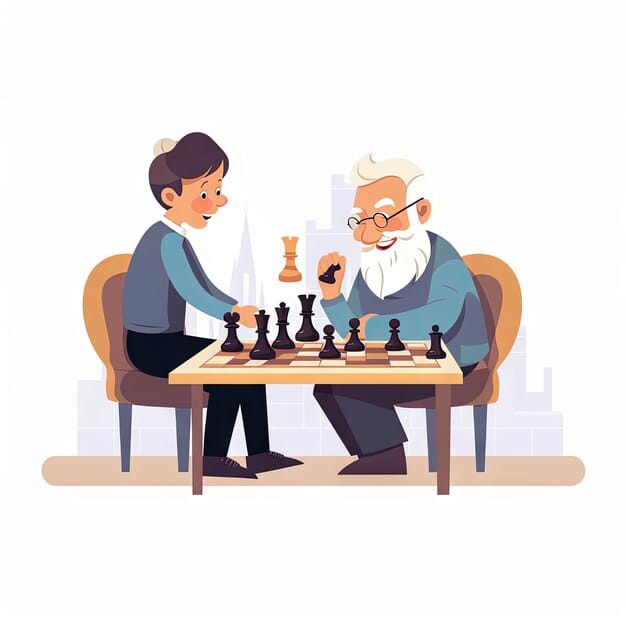
#13 It all began like this. I was driving my 10-year-old grandson home from school when he excitedly shared, “Aaba, today I won six out of seven chess games at school.” He had lost the seventh game to his chess teacher. Chess was doing more than just building his confidence; it was fostering a sense of healthy competition. With every victory, his skills improved, and with each game, he grew more determined. Even the loss to his chess teacher didn’t dampen his spirits. Instead, it filled him with pride in his abilities, which got me thinking deeply about the role of chess in a child’s development. The Cognitive Benefits of Chess Chess does more than entertain; it challenges young minds to think critically and emotionally mature. The game fosters essential cognitive skills, such as problem-solving, memory, concentration, and emotional regulation—all in an engaging and fun way. Every game requires the player to anticipate their opponent’s next move while making calculated, strategic decisions. This step-by-step approach is not just applicable to chess but extends into other subjects like mathematics, science, and overall learning. To succeed in chess, a child must recall strategies, recognize patterns, and apply learned knowledge. This sharpens both short-term and long-term memory, continually testing and improving memory retention. The benefits of these mental exercises are often reflected in academic performance. During a single game, a player must maintain focus for extended periods, an essential skill that translates into real life. Participation in chess tournaments not only enhances chess skills but also improves academic outcomes and builds perseverance in other areas of life. A Real-Life Chess Success Story: Unnikrishnan’s Chess Hotel Unnikrishnan, a man from Kerala, returned to his village only to find it in a dreadful state. The entire community was trapped in alcohol addiction, and the village economy revolved around it. There seemed to be no hope. Determined to make a change, Unnikrishnan started “Unnikrishnan’s Chess Hotel,” a place where he invited villagers to play chess. Slowly, the villagers, once ruled by alcohol, found a new focus in chess. The mental challenge of the game distracted them from their addiction, and over time, the dependence on alcohol waned, replaced by a newfound sense of purpose. Conclusion Chess is far more than just a game. It is a powerful tool that nurtures a child’s intellectual and emotional development. From enhancing problem-solving skills and memory to building emotional resilience and confidence, chess offers a range of benefits that help children grow both academically and personally. Introducing chess to children can truly be a transformative experience, shaping them into thoughtful, disciplined, and resilient individuals. – Dr. Anil Mokashi (Pediatrician)MBBS, MD, DCH, FIAP, PhD(Child Growth and Development)