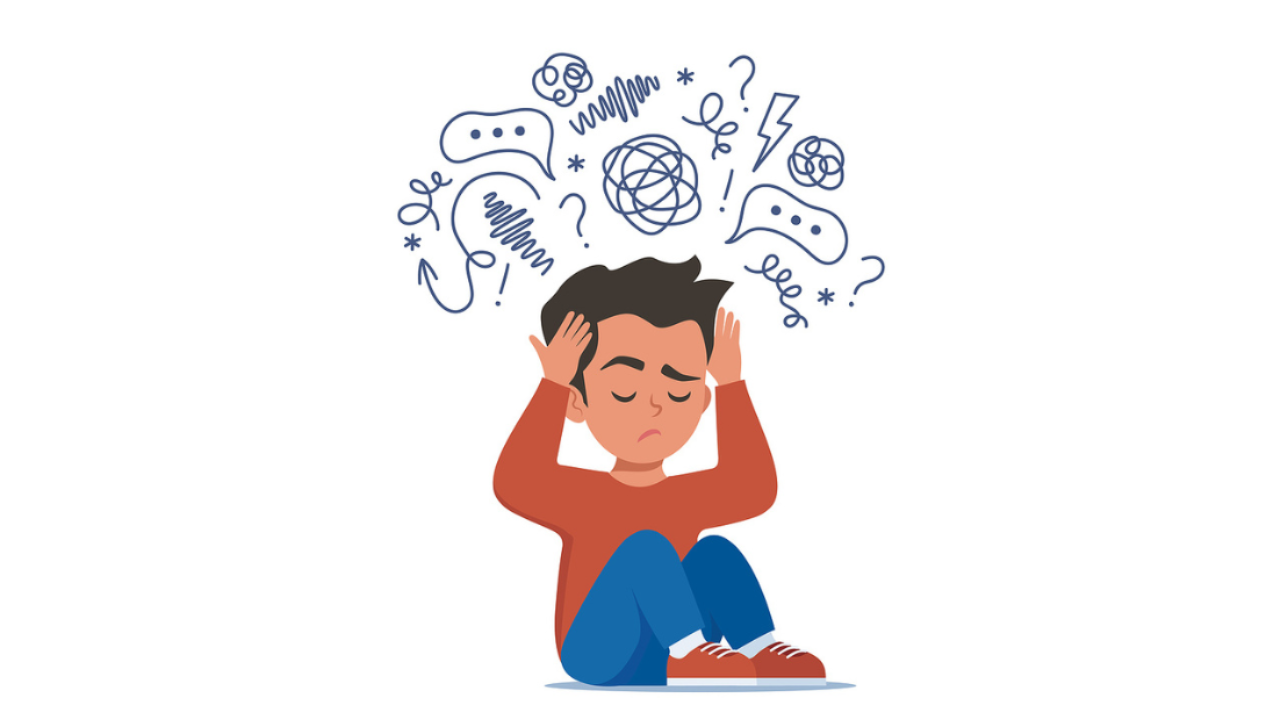
A child who is difficult to raise or educate is sometimes called a problem child. Many children do not develop or learn like others. They are different. They are special. They have special needs. “Special” does not necessarily mean abnormal. There are many special children around.
SPECIAL CHILDREN
- Mentally challenged
- Hearing impaired
- Visually impaired
- Physically challenged
- Slow learners
- Dyslexia & learning disabilities
- Attention deficit hyperactive disorders
- Autism spectrum disorders
- Psychiatric concerns
- Behavioral difficulties
- Street children
- Children from broken families
- Children who have lost father/mother
- Orphans
- Juvenile offenders
- Children in remand homes
- Children of convicts
- Children of wandering families
- Children of sex workers
- Disaster-affected children
- Children with chronic illness (Cardiac, Respiratory, GI Tract, Renal, Neurological, Hematological, Genetic, Endocrine, Autoimmune, Metabolic disorders)
The list is unending.
It is a community pediatric problem. The causes of such difficulties are classified according to etiological factors:
- Problems in the child
- Problems in the family
- Problems in the community
- Problems in the school
A pediatrician is the first contact person in case of any childhood problem, health or otherwise. He is supposed to identify and institute remedial measures. Calling any problem multidisciplinary is sometimes counterproductive.
When everybody is responsible, in fact nobody is responsible. Here comes the role of child advocacy.
Family and community connections with schools are many times the answer to educational needs of children with difficulties.
SPECIAL PROBLEMS
Formal education is designed for typical children, in typical families, in a typical community. Special needs children in formal school get the label of scholastic backwardness.
“If he cannot learn the way we teach, we should teach the way he can learn.”
That is the guiding principle of special schools. We need to identify the cause of “Red Lines in School Progress Card” and institute remedial measures. Special education in essence is remedial education. It is individualized education. Because of difficulties faced by special children, a formal school cannot cope with their needs. They need a special school.
It is not enough to identify the branch as ‘special education’, or to call the teachers ‘special education graduates’. Special facilities with special syllabus and special curriculum need to be evolved.
SPECIAL SCHOOL
There are few schools for children with mental retardation and hearing impairment. Still fewer for the blind. There are hardly any facilities for slow learners, dyslexics, autistics. In many places these special children are grouped with children having intellectual disability.
The flaw lies in government rules. Government wants to report all special children as mild intellectually disabled.
Special schools need special teachers, smaller classes, capacity-building curriculum, developmental atmosphere (not just academic), audio-visual aids, do-it-yourself mode of learning, multisensory teaching programs (our specialty).
A child needs 4 hours academic & 2 hours developmental syllabus. Extracurricular activities should be considered curricular activities. What he can do is more important than what he knows. Teach them doing things. Developmental syllabus promotes action.
- Study habits training: Reading, writing, memorizing, understanding, abstracting, note-taking, etc.
- Social skill training: Behavior in family, peer group, school, community, etc.
- Competitive examinations: Drawing, painting, Math, English, Marathi, Hindi, G.K. test, intelligence tests, talent search, scholarship, etc.
- Children’s competitions: Essay, handwriting, storytelling, joke-telling, reciting, poetry, drama, music, singing, sports, games, elocution, debate, etc.
- Science projects: science exhibition projects
- Library, souvenir, annual magazine, notice board, magazine, etc.
- Theme trips: Trips based on curricular topics
- Performing arts: Drama, one-act plays, street plays, solos
- Art, craft, hobby
- Celebrating designated days like Health, Environment, Teacher’s, Women’s, Children’s Day, etc.
- Celebrating religious festivals
- Typing, shorthand, computer operating
- Operating voice recorder, radio, TV, camera, overhead projector, slide projector, computer for learning purposes
- Internet, online education, online examinations
- Using directory, dictionary, atlas, maps, yellow pages, encyclopedia
- Sports and games
OPEN EDUCATION AND NIOS
Open education is adjustable to the needs of an individual special child. It is non-competitive. The rat race for marks is eliminated. So are extra tuitions, extra homework, frustration, and resulting humiliation. With the help of open education a special child can enjoy learning.
National Institute of Open Schooling (NIOS) has given us this opportunity to bring smiles on the faces of special children and their parents. NIOS is a statutory body established by the Human Resource Ministry of Government of India. It is like CBSE or SSC board. It is established for children who cannot attend formal school. Special children also cannot attend formal school. They do not like ‘this school’; the school does not like ‘this child’. Both struggle with each other.
Best of the schools wait for a second-time failure and hand over the school leaving certificate. What happens to the child is none of their business. It is not their fault. They are not equipped to handle the child.
NIOS Open Basic Education offers 3rd, 5th, 8th standard courses. Examination is conducted locally by our school. The 10th and 12th examinations are conducted by NIOS at national level. NIOS has special schemes for handicapped and disadvantaged children. They have vocational subjects in academic curriculum. That is the revolution.
Students have the freedom to choose their subjects. They can pass 10th & 12th without Math, Science, and English. 60 percent of children fail in S.S.C. / H.S.C. All of them fail in these three subjects only.
A small businessman, trader, service provider, electrician, plumber, building contractor, hotel owner, farmer, sportsman, singer, photographer needs to pass 12th but need not get stuck with Mathematics, Physics, Chemistry, and English. But he needs to be a graduate. Open education has opened the gates for him.
Home science teaches adequate science. Subjects like typing, word processing, business studies are useful for life. Five subjects option, credit accumulation facility, direct registration facility – all are novel, extremely useful concepts.
The disability sector needs to revise its orientation and fit their curricula in NIOS format. At Baramati we have done just that.
– Dr. Anil Mokashi (Pediatrician)
MBBS, MD, DCH, FIAP, PhD
(Child Growth and Development)